
Christopher Nolan’s The Odyssey put one of the world’s oldest travel stories back on the big screen in 2026—and launched Greek voyages back into our travel imaginations. It might be the year’s biggest inspiration for ‘set-jetting': planning your own dramatic exploration of Greece inspired by the film.
Homer’s epic follows Odysseus making his way on a ten-year voyage home across a mythical Mediterranean world of islands, storms, temptations, monsters and gods. Nearly 3,000 years later, real-life Greece is less dramatic, but a bucket-list odyssey of your own.
Nolan filmed part of his colossal new movie in Greece, especially in the Peloponnese, using real landscapes to bring Homer’s mythical world to life on screen.
You don’t have to follow Odysseus’ route literally. And fortunately, modern Greek island-hopping involves fewer monsters!
Even if you don’t specifically take a cruise to discover Greece, discovering parts of this nation of over 200 inhabited islands (and thousands more uninhabited) will involve time on the water, so you can channel your inner Odysseus.
Santorini: Drama Worthy of the Gods
If you close your eyes and picture a Greek island, chances are you’re picturing Santorini.
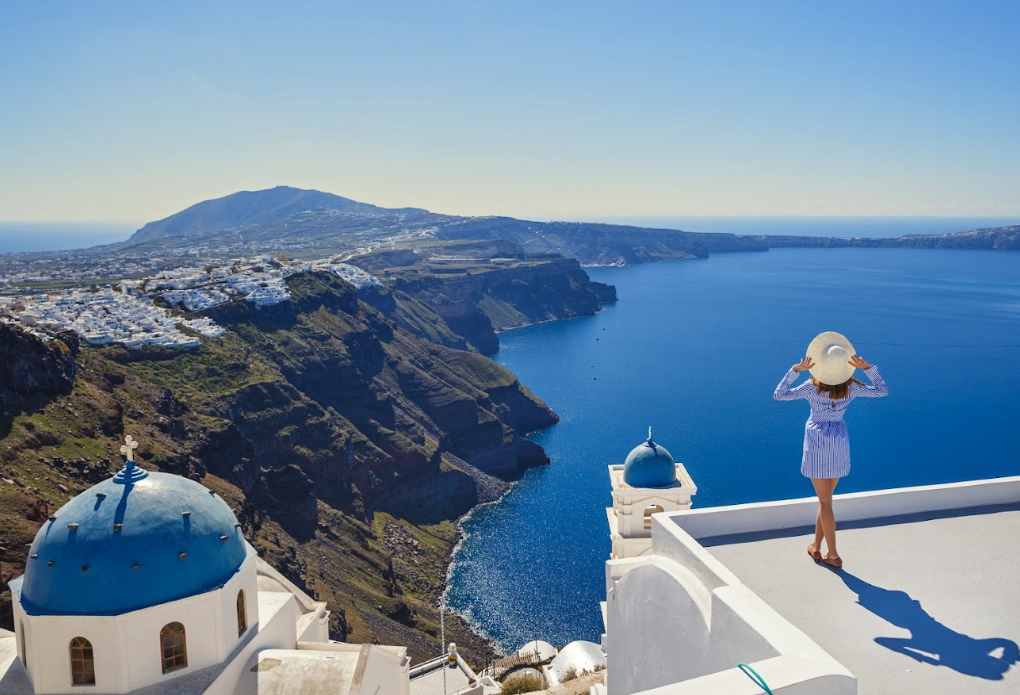
Whitewashed villages spilling down cliffs, blue-domed churches, narrow lanes, and the brilliant Aegean below have made Santorini one of Greece's defining images.
But its beauty was born from geological violence worthy of Greek mythology.
Santorini is what remains after an enormous ancient volcanic eruption transformed the original island. Today, a crescent of towering cliffs surrounds a flooded caldera, so arriving by sea means sailing directly into the remains of a volcano.
Odysseus had monsters. Santorini has geology.
The island capital, Fira, clings to the cliff high above the water, while Oia has become famous for sunsets that bring half the island to a standstill.
My Favorite Things: Santorini’s black- and red-sand beaches, intensely flavored tomatoes and capers, and Assyrtiko wines. The vines are traditionally trained close to the ground in basket-like shapes to protect them from island winds.
Mykonos: The Odyssey After Dark
Not every Greek odyssey has to be ancient.
Cosmopolitan, fashionable and unapologetically social, Mykonos combines Greek-island scenery with Ibiza energy and a touch of French Riviera glamour. Beach clubs, stylish hotels, boutiques, restaurants and nightlife have made it one of the Mediterranean’s great see-and-be-seen destinations.
If Circe had run a beach club, it might have looked something like Mykonos.
But step away from the party and the island has plenty of character of its own.
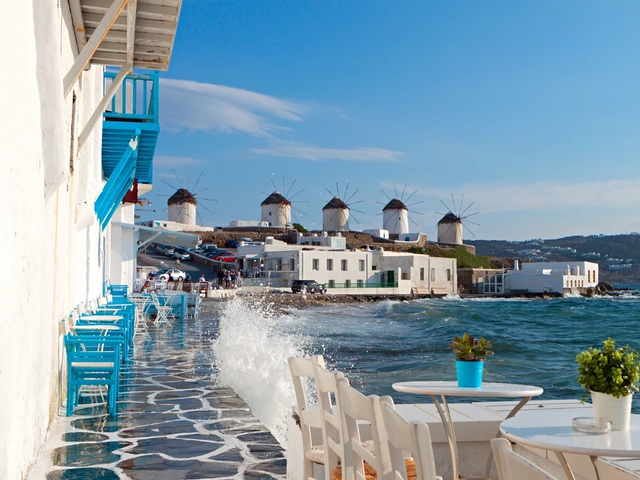
Mykonos is nicknamed the “Island of Winds,” and its historic windmills remain defining features of the landscape. Built centuries ago to harness those powerful breezes and grind grain, they still overlook the town like sentries from another era.
The main town, also known as Chora, is a maze of whitewashed buildings and twisting lanes where getting lost is almost part of the experience.
Odysseus took ten years to find his way home. Give yourself at least an afternoon.
My Favorite Things: Little Venice, where rows of colorful old houses with balconies hang over the water and now contain cafés, bars, shops and galleries. It’s one of the island’s best sunset spots—and unlike Odysseus, you can enjoy yours with a stylish cocktail.
Rhodes: History on an Epic Scale
If The Odyssey leaves you craving monumental history, add Rhodes to your voyage.
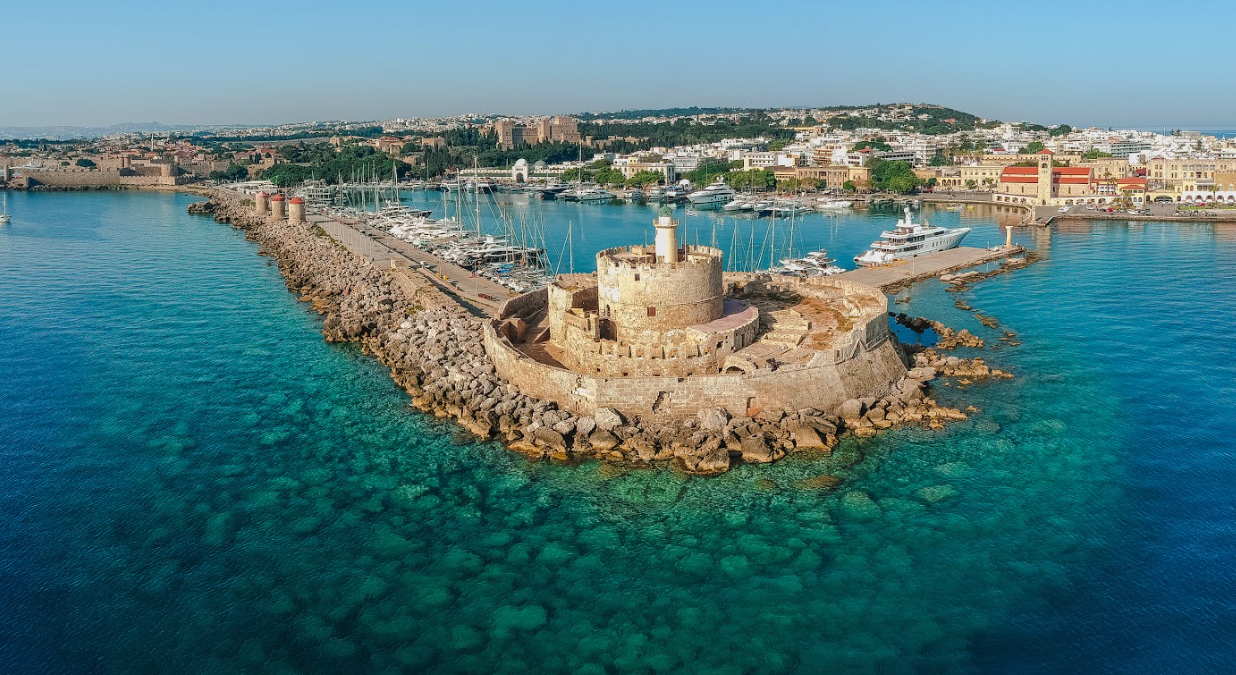
Known as the Island of the Knights, Rhodes has one of Europe’s most impressive surviving medieval cities. Its UNESCO-listed Old Town is surrounded by huge fortifications built and expanded over centuries.
Walk the Street of the Knights toward the Palace of the Grand Master and the Middle Ages suddenly feel very close.
But Rhodes’ story reaches much further back.
In antiquity, its strategic location made it an important maritime and commercial power. Its greatest symbol was the Colossus of Rhodes, one of the Seven Wonders of the Ancient World.
The enormous bronze statue stood for only decades before an earthquake toppled it, but even lying in ruins, it remained a tourist attraction for centuries.
Ancient travelers, apparently, also loved a famous landmark.
The popular image of the Colossus straddling Mandraki Harbour with ships sailing between its legs is almost certainly more legend than history. Today, two deer-topped columns stand at the harbor entrance, keeping the story alive.
My Favorite Things: Rhodes’ beaches and wine. The island has one of Greece’s oldest winemaking traditions, while its greener, mountainous interior is a surprising contrast to the fortified city and resort-lined coast.
Add the Real Odyssey Landscape and Locations
To connect your trip more directly with Nolan’s film, leave the islands temporarily and head to the Peloponnese, a rugged peninsula on the south coast of mainland Greece.
Around Messinia, filming took place at dramatic locations including horseshoe-shaped Voidokilia Beach and nearby Nestor’s Cave, while other Greek locations such as Methoni Castle and Acrocorinth helped create the film’s ancient world.
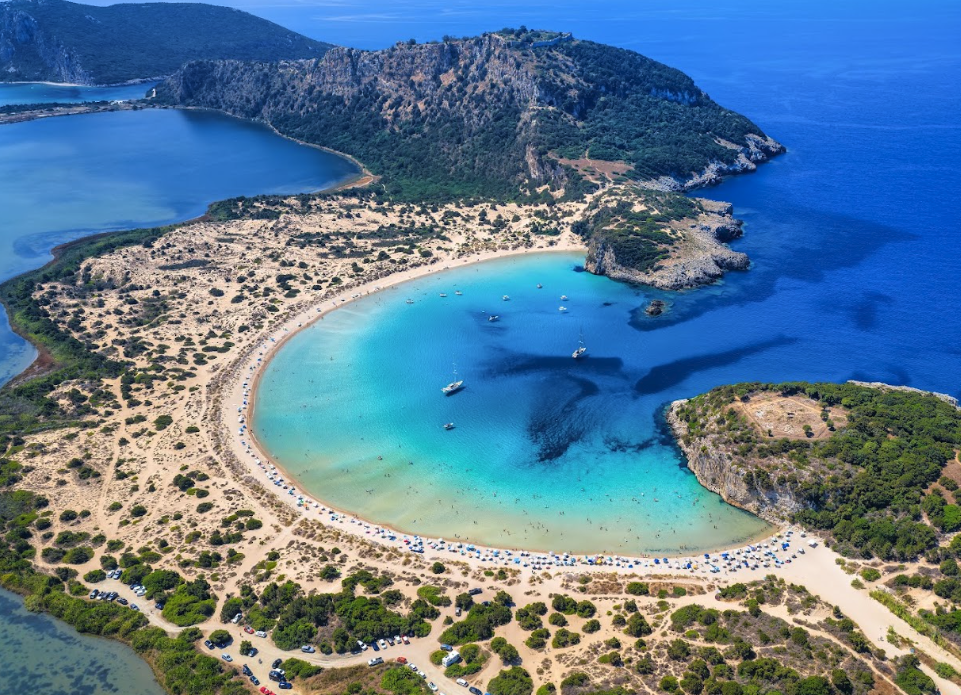
Ancient ruins, medieval fortresses, olive groves, caves and beaches still occupy the same landscapes that inspired stories thousands of years ago.
Homer’s hero spent ten years trying to get home. Your problem may be forcing yourself to leave Greece.
START YOUR TRIP!
By: Lynn Elmhirst, cruise/ travel journalist and expert
Images: Getty
All rights reserved. You are welcome to share this material from this page, but it may not be copied, re-published, broadcast, rewritten or redistributed.